We have over seven years’ extensive egg freezing experience of providing frozen donor and own eggs for treatments, and so far in our laboratories we have frozen more than 30,000 eggs and thawed. As much as 80 eggs bring the likelihood of a guaranteed live birth over age 40.

How Egg Freezing Success Rates Change with Age Expecting Science
Egg freezing success rates by age;
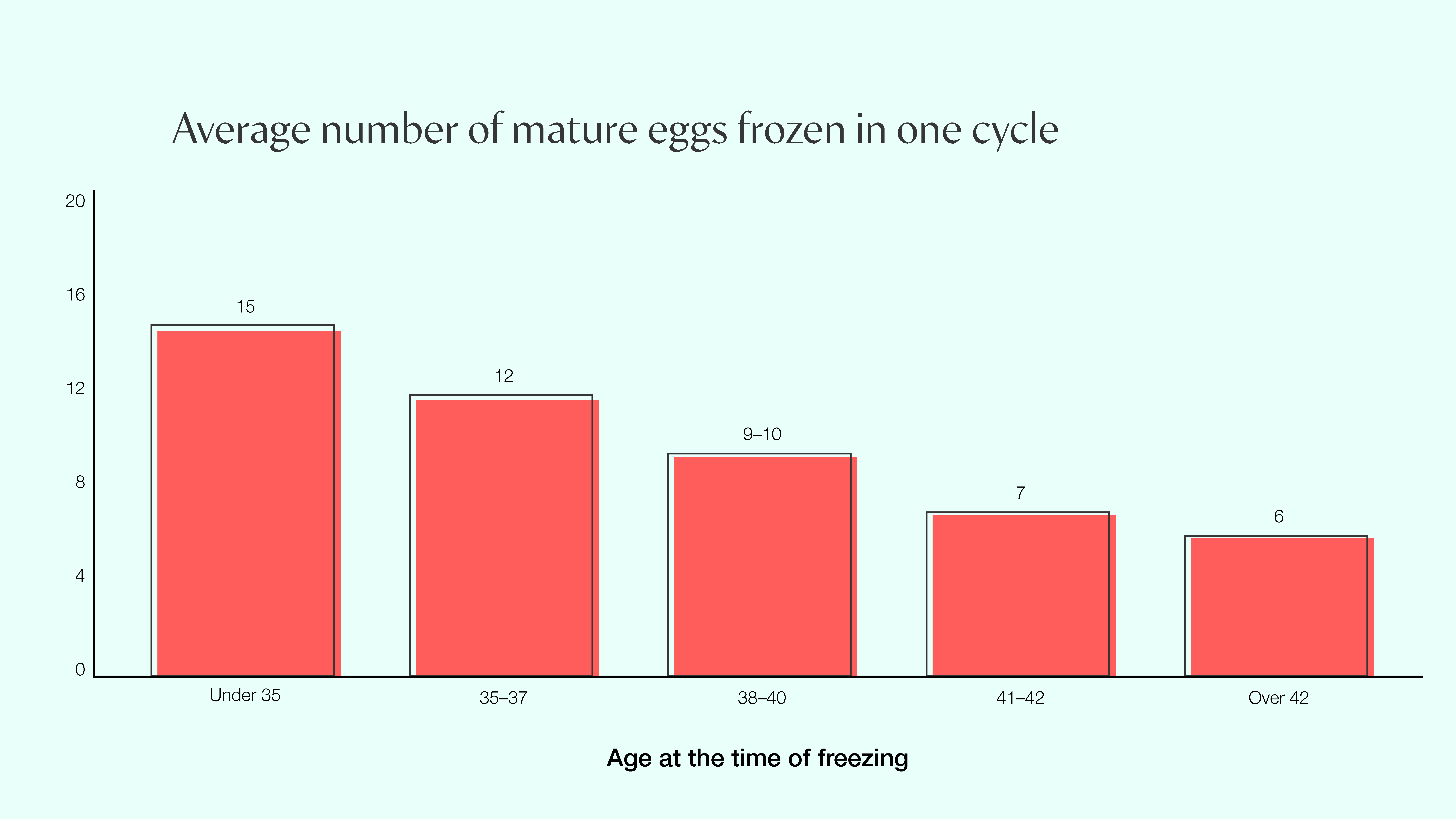
Egg freezing success rates by age. If you have already frozen eggs, you can also use this formula to decide how many of those eggs to thaw to attempt ivf. The average age of egg freezing in the united states is 37.4. Success varies with many factors.
A study by fertilityiq revealed that “women who stored 10 eggs after the age of 35, had a 30% success rate. Egg freezing provides women with the revolutionary advantage of delaying their childbearing years and overcoming the limitations of the “biological clock.” ( reproductivefacts, 2014) the probability of live birth after three cycles of ivf is 31.5% for women who froze their eggs at age 25, 25.9% at age 30, 19.3% at age 35, and just 14.8% at age 40.
For instance, researchers examined 520 healthy, fertile women at brigham and women's hospital, boston, and the findings were as follows: 41% of cryopreserved eggs “frozen” before a patient’s 35 th birthday fertilize and develop to blastocyst. Successfully warmed (viable) egg to blastocyst development rate (this number will depend on the fertilization rate and embryo development rate):
The same study shows that women over 40 need at least 20 eggs for a 50% success rate. “freezing eggs since before it was cool” improvements in freezing solutions led to a surprisingly high survival after egg thaw of 91% even after being frozen for up to four years. The recommended age to try to become pregnant is from 20 years old until 35 years old as this is when you are most fertile.
Currently women using their own frozen eggs in treatment have a success rate of 18% (30% with frozen donor eggs), which offers no guarantee of achieving a successful pregnancy and. Women under 35 with the same number of eggs had twice that. ( fertstert, 2011) egg freezing is most successful for women younger than 38 years.
But its complicated success rates make experts wary about its growing popularity. Egg freezing continues to grow in research and interest. The age of the woman is the most important factor, when women are using their own eggs.
West coast fertility centers have been able to achieve these success rates by thawing just 6. Although the process is becoming more. Most data was from doyle et al however, the >42 age group threshold was from *goldman et al.
Part of this decline is due to a lower chance of getting pregnant from art, and part is due to a higher risk of miscarriage with increasing age, especially over age 40. How to improve egg freezing success rates. Age that eggs were frozen probability of having at least 1 child probability of having at least 2 children probability of having at least 3 children;
Egg freezing success rates the chances of a successful pregnancy with frozen eggs are the same as through a natural process. Older women need to freeze many more eggs than a woman in her early twenties to have the same chances of a successful pregnancy. Since we were established in 2014, london egg bank has consistently delivered the uk's highest recorded egg survival rates after freezing, at over 90% in all age groups.